and Chasing Jupiter from my Yard.
  Back to MrGibson HOME
| and Chasing Jupiter from my Yard. |
Back to MrGibson HOME |
|
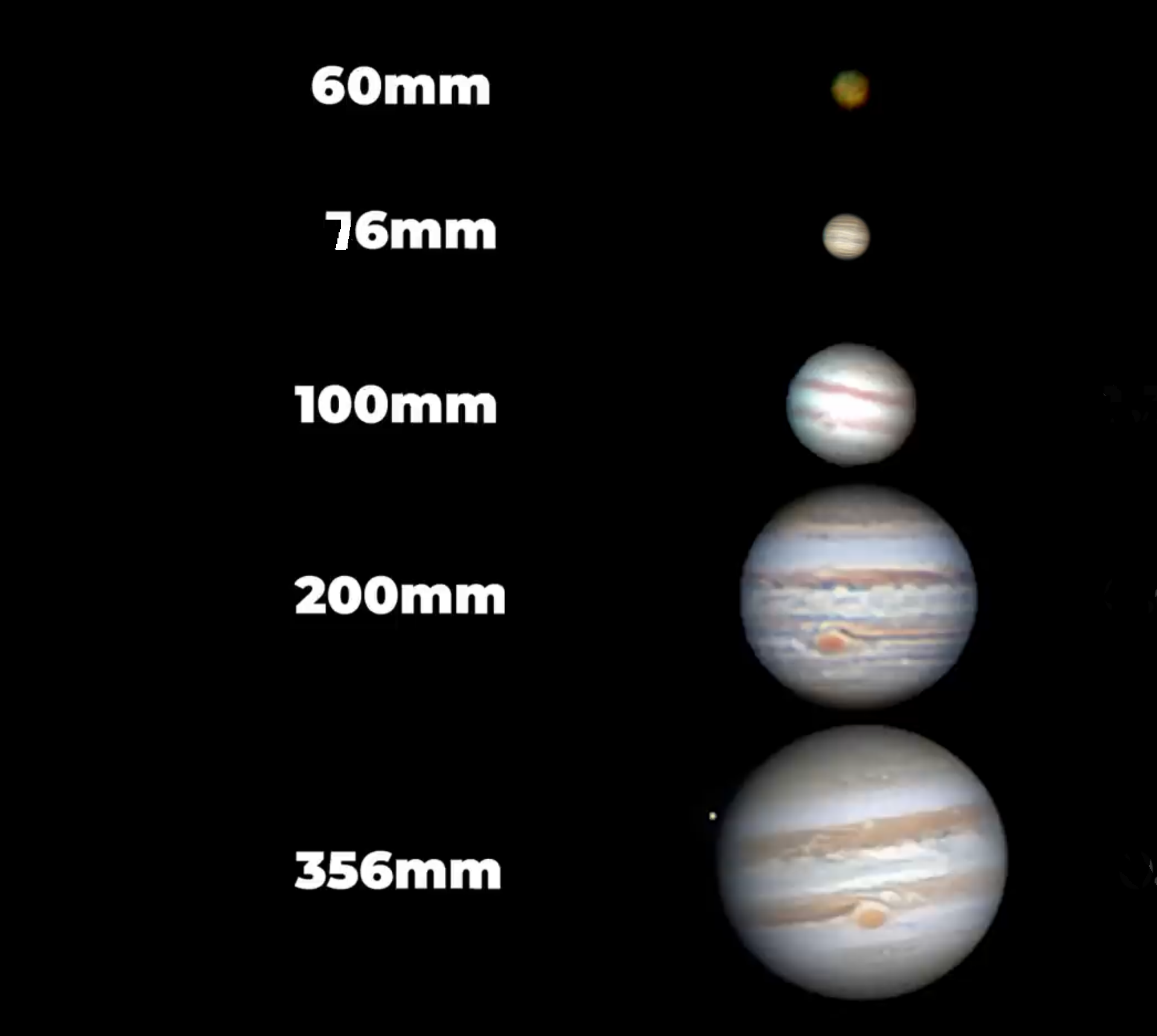
Viewing planets Aperture The larger the Aperture, the better detailed and clearer the view of the planet. The larger the Aperture, the more "useful magnification" you can use. The larger the Aperture, the more light that is collected. The more light that is collected, the more detail you can see.
Aperture allows for more detail to come through. That said, the larger your aperture, the more "useful magnification" you have access to. What good is it to see a large Jupiter, but all blurr or too dim?. f-number For planets, you don't want a lower f-number, ideally, you want one between f/9 and f/15 ("slow"). You can work with f/5 and slower. A lower f-number is considered "faster" because it gathers more light per unit of time, making it highly effective for capturing these faint, expansive targets. f/9.0 and above is slow. Because of its inherent magnification and contrast, and f/9.0 plus optic is highly valued for observing or photographing the Moon, planets, and double stars. For deep-sky objects (DSOs) like nebulae and galaxies, the ideal f-number (or focal ratio) generally ranges from f/2 to f/8. To find the f-number of your telescope:
          N  =  Telescope Focal length (mm)
                   Aperture diameter (mm)
Where:
N = Focal ratio (often written as f/N )
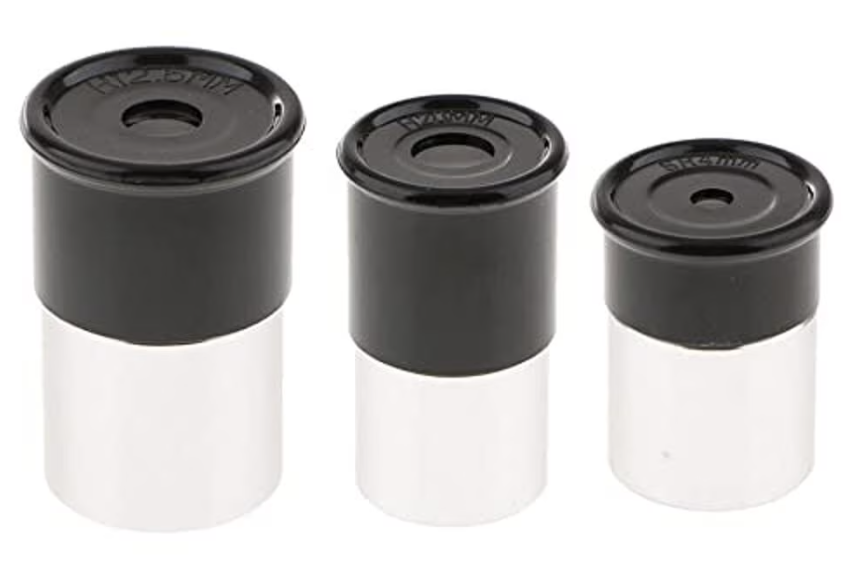
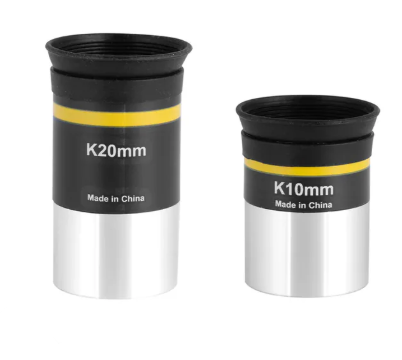
Magnification, the greater the magnification, the larger the object will look. Magnification is mostly controled by the telescope's focal length and the eyepiece lens that is chosen. Common eyepiece lenses are 25mm, 20mm, 12.5mm, 10mm, 8mm, 6mm, 4mm.
           Magnification  =   Telescope Focal Length (mm)
                            Eyepiece Lens Focal Length (mm)
- examples: - - if your focal length is 1000mm and you have a 20mm eyepiece lens, your Magnification is 50x Magnification. - - if your focal length is 1000mm and you have a 10mm eyepiece lens, your Magnification is 100x Magnification. - - if your focal length is 700mm and you have a 20mm eyepiece lens, your Magnification is 35x Magnification. - - if your focal length is 700mm and you have a 10mm eyepiece lens, your Magnification is 70x Magnification. - - if your focal length is 400mm and you have a 20mm eyepiece lens, your Magnification is 20x Magnification. - - if your focal length is 400mm and you have a 10mm eyepiece lens, your Magnification is 40x Magnification. - - if your focal length is 200mm and you have a 20mm eyepiece lens, your Magnification is 10x Magnification. - - if your focal length is 200mm and you have a 10mm eyepiece lens, your Magnification is 20x Magnification. Maximum Useful Magnification Sometimes called the Practical Magnification. This is the messurement of the strongest magnification that will keep a crisp/clear image.
Maximum Useful Magnification = Telescope Aperture (mm) x 2
For example: - if you have a telescope with an aperture of 200mm, your Maximum Useful Magnification is 400x. - if you have a telescope with an aperture of 100mm, your Maximum Useful Magnification is 200x. - if you have a telescope with an aperture of 76mm, your Maximum Useful Magnification is 152x. - if you have a telescope with an aperture of 70mm, your Maximum Useful Magnification is 140x. NOTE: Most nights, lunar and planetary magnification is limited to about 180x - 200x because of the atmosphere. NOTE: Any low end telescope advertising Magnification over 250x, is selling parts that will be worthless to you. There are telescopes that sell parts for 525x or 575x, using 76mm to 90mm Aperture, but what is rendered will mostly useless, blurry, or not visible at all. Minimum Useful Magnification Because of the limitations of the human eye, the telescope has a minimum useful Magnification.
          Minimum Useful Magnification =  Telescope  Aperture (mm)
                                                    7
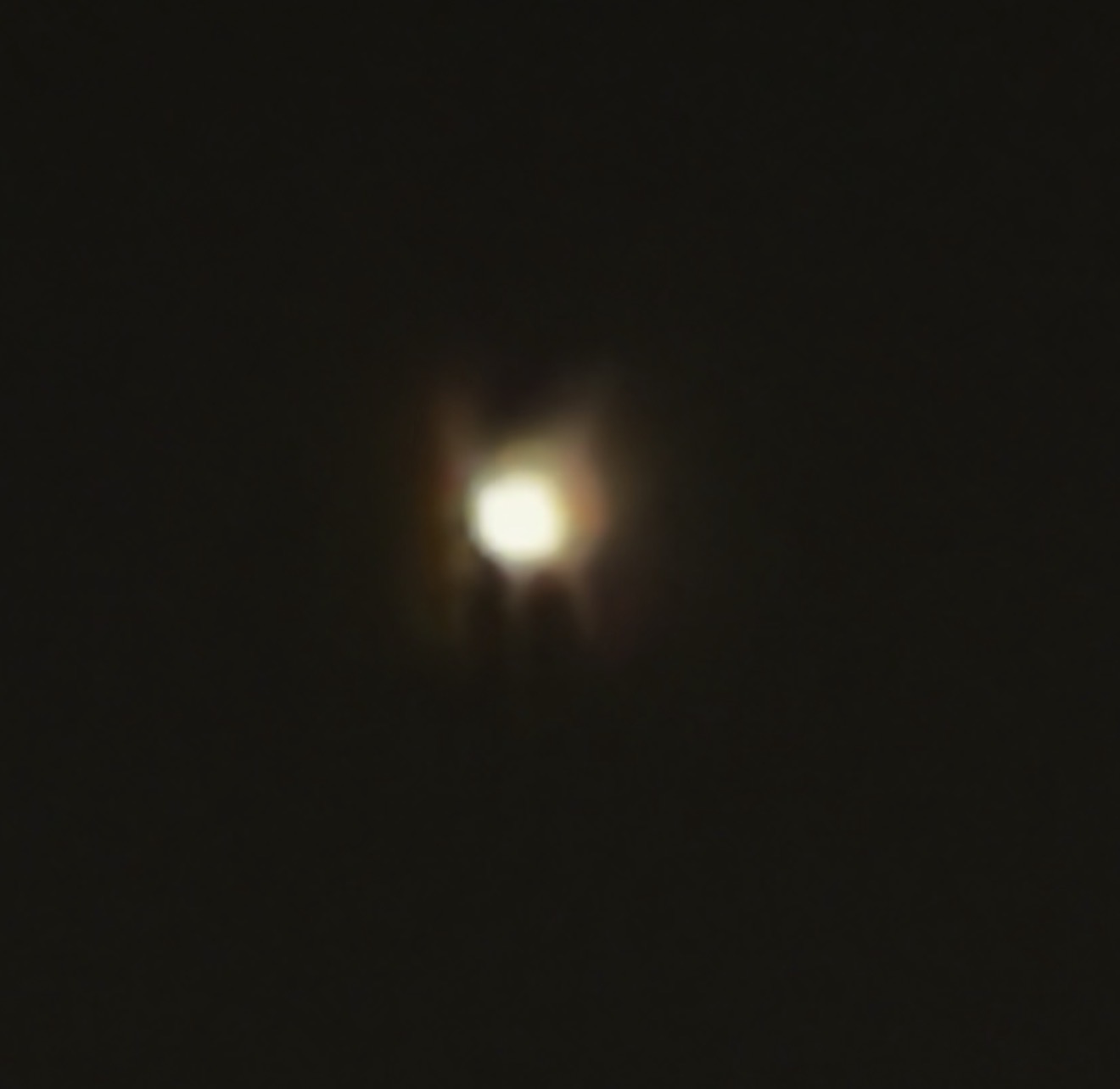
Saturn A Magnification of 25x can barely see the rings of Saturn. A Magnification of 40x Looks like a tiny "eye" in space, or an oblong shaped planet depending on the tilt of the rings. Saturn’s biggest and brightest moon Titan can be spotted close to the planet. A Magnification of 70x can see the ring detail A Magnification of 100x The rings are now easily visible, though to some, they still make Saturn look like an eye. A sharp eyed viewer can see the yellow color of the planet. Multiple moons can be seen. A Magnification of 120x can see Saturn’s rings, the Gaps between the rings and clouds on the surface of Saturn. A Magnification of 200x More detail on the rings are now visible, especially if they are tilted at just the right angle. One such detail is the Cassini Division, which looks like a black stripe on the rings. Jupiter A Magnification of 50x can see disc that is white, but you can still see up to four star-like points in a line, which are in fact its own moons orbiting the planet. A Magnification of 70x can see Jupiter cloud bands and its four major moons. A Magnification of 100xcan see a great all around view of Jupiter, as you can see cloud detail on the planet, and see all four moons all in the same FOV. The Great Red Spot can also start being seen as well as a tiny orange colored dot on the planet (if it’s on the side facing Earth). A Magnification of 120x can see the cloud bands and great red spot of Jupiter. A Magnification of 200x can see details on Jupiter are a lot more visible, and the Great Red Spot looks like a small circle. If any of the Galilean Moons are passing directly in front of Jupiter, it is possible to see their shadows being projected on the face of Jupiter. Mars Mars' Magnitude ranges from a faint +1.86 when on the far side of the Sun to a brilliant -2.94 at its closest approach. The Magnification and Aperture that is configured for viewing Mars is more important than Venus, Jupiter, and Saturn. To recognize Mars as a defined planetary disk, a minimum of 75x to 100x Magnification is required. A Magnification of 120x can faintly see polar ice caps and valleys on Mars. A Magnification of 200x can see the Polar ice caps on the Martian surface and the Syrtis major volcanic region.
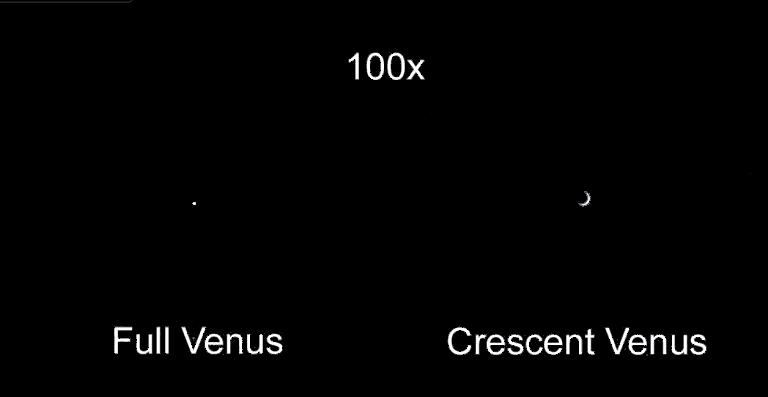
A Barlow lens can be used to increase the magnification of your telescope to provide a closer view of Venus. NOTE: Mercury, Uranus, and Neptune are difficult for hobby telescopes. Venus is difficult due to being really close to the Sun. Uranus and Neptune are very far away and dim. |
 (c) 2000-2026 by Michael Gibson. All graphics, code (php, html, css, javascript, ect.), content (unless source states other), and posts by Michael Gibson. Graphics, content and code created with GIMP, gedit, and usually vim. This page uses CSS that works on *ALL* browsers that are CSS compliant. Like FireFox, Chrome, Edge, and Safari. Moving code to PHP 8.x You are using Mozilla/5.0 AppleWebKit/537.36 (KHTML, like Gecko; compatible; ClaudeBot/1.0; +claudebot@anthropic.com) |