


 and Chasing Jupiter from my Yard.
  Back to MrGibson HOME
| and Chasing Jupiter from my Yard. |
Back to MrGibson HOME |
|
Viewing outside of our Solar System f-Number For faint objects out side of our Solar System, you will want a fast f-Number, somewhere between f/2 and f/4. You can use a mid range f/number between f/5 to f/7, but generally, gathering light fast is the goal. Above f/9, don't expect great results. To find the f-number of your telescope:
          N  =  Telescope Focal length (mm)
                   Aperture diameter (mm)
Where:
N = Focal ratio (often written as f/N )
Aperture When viewing objects outside of our solar system, the bigger the Aperture, the better the result. The Aperture will help with the Magnitude of the object. Magnitude is a measurement of astronomical brightness. On this scale, the higher the positive number, the dimmer the object. Negitive numbers are bright. The Magnitude scale is a reverse-logarithmic system where each whole number step represents a brightness difference of about 2.5 times. Naked-eye limit: Around Magnitude +6.0 . Everything outside of our Solar System will have a postive number Magnitude. Many objects will have above +6.0 . For example: Magnification Often magnification is no longer the primary factor. For planets your goal is high Magnifications. For most deep space ojects, not often. - examples: - - if your focal length is 1000mm and you have a 20.0mm eyepiece lens, your Magnification is 50x Magnification. - - if your focal length is 700mm and you have a 12.5mm eyepiece lens, your Magnification is 56x Magnification. - - if your focal length is 700mm and you have a 20.0mm eyepiece lens, your Magnification is 35x Magnification. - - if your focal length is 400mm and you have a 20.0mm eyepiece lens, your Magnification is 20x Magnification. - - if your focal length is 400mm and you have a 10.0mm eyepiece lens, your Magnification is 40x Magnification. - - if your focal length is 200mm and you have a 20.0mm eyepiece lens, your Magnification is 10x Magnification. - - if your focal length is 200mm and you have a 10.0mm eyepiece lens, your Magnification is 20x Magnification. The next four of five objects should use a low Magnification between 20x and 50x. The 6th should use a high Magnification. These are ordered from bright to dim View Pleiades (M45), also known as the Seven Sisters, or Jewel of the Sky Magnitude: +1.6 . Best Magnification: Low Angular Size: 110 arcminutes or 2° Best seen in Evening: October to April The Pleiades (M45) requires low magnification, specifically 25x to 50x, with a wide field of view of at least 1.5 to 2 degrees to frame the entire cluster. The angular size of the Pleiades star cluster is approximately 110 arcminutes (1.8 to 2 degrees), which is about four times the diameter of a full Moon. The Pleiades star cluster is best seen in the evening sky from October to April, shining all night long during November and December. Use Orion's Belt to point to Pleiades (right of).  View Twin (gold/blue) Stars Albireo (β Cygni) Combined Magnitude: +3.05 (visible to the naked eye as a single point) - Albireo A (Primary/Bright Star): Magnitude +3.1 (golden-yellow) - Albireo B (Secondary/Fainter Star): Magnitude +5.1 (blue) Best Magnification: Low Angular Size: 35 arcseconds Best seen: Albireo is best viewed from June through September Use somewhere between 30x to 60x magnification for good seperation. Larger the aperture, better the color.  View the Andromeda Galaxy (M31) Magnitude: +3.4 . Angular Size: 3.167° × 1° Best Seen in the Evening: Fall and Winter Best Magnification: Low You will want a moonless and clear sky on a fall or winter night. To spot the Andromeda Galaxy (M31), use a wide-field telescope. Look for the "W" shape of Cassiopeia to the northeast, and use the deeper, right-hand "V" of the W as an arrow pointing down to the "fuzzy smudge". Depending on the telescope's focus length, use a 20mm, 25mm, or 32mm Eyepiece/lens. A very low magnification to see it. For some telescopes, 20x or 40x is ideal. Others, 50x is ideal. Adromeda Galaxy is 6 moons wide in the sky. Do not use any Barlow lens! 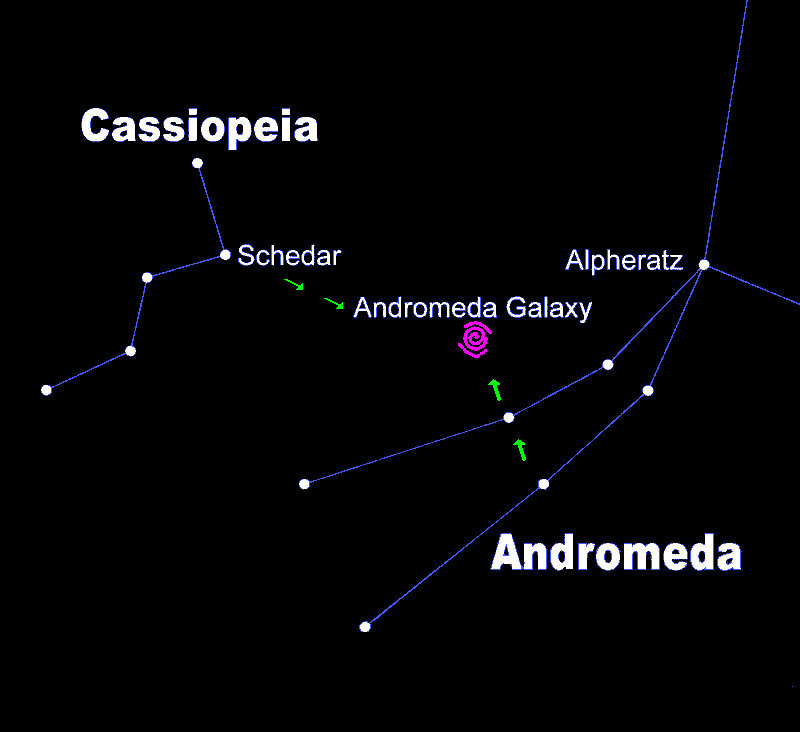 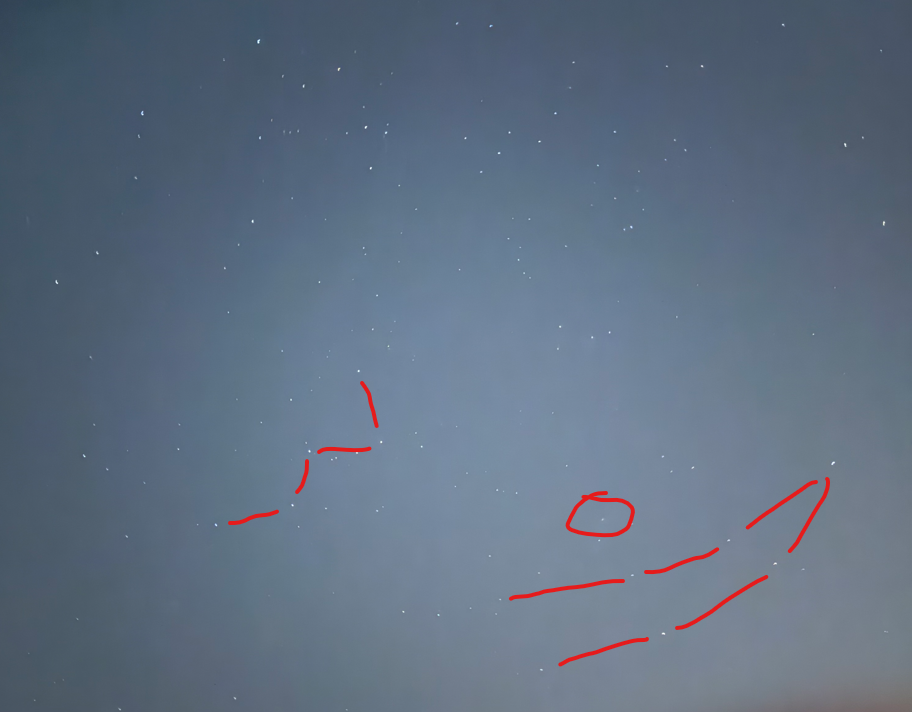 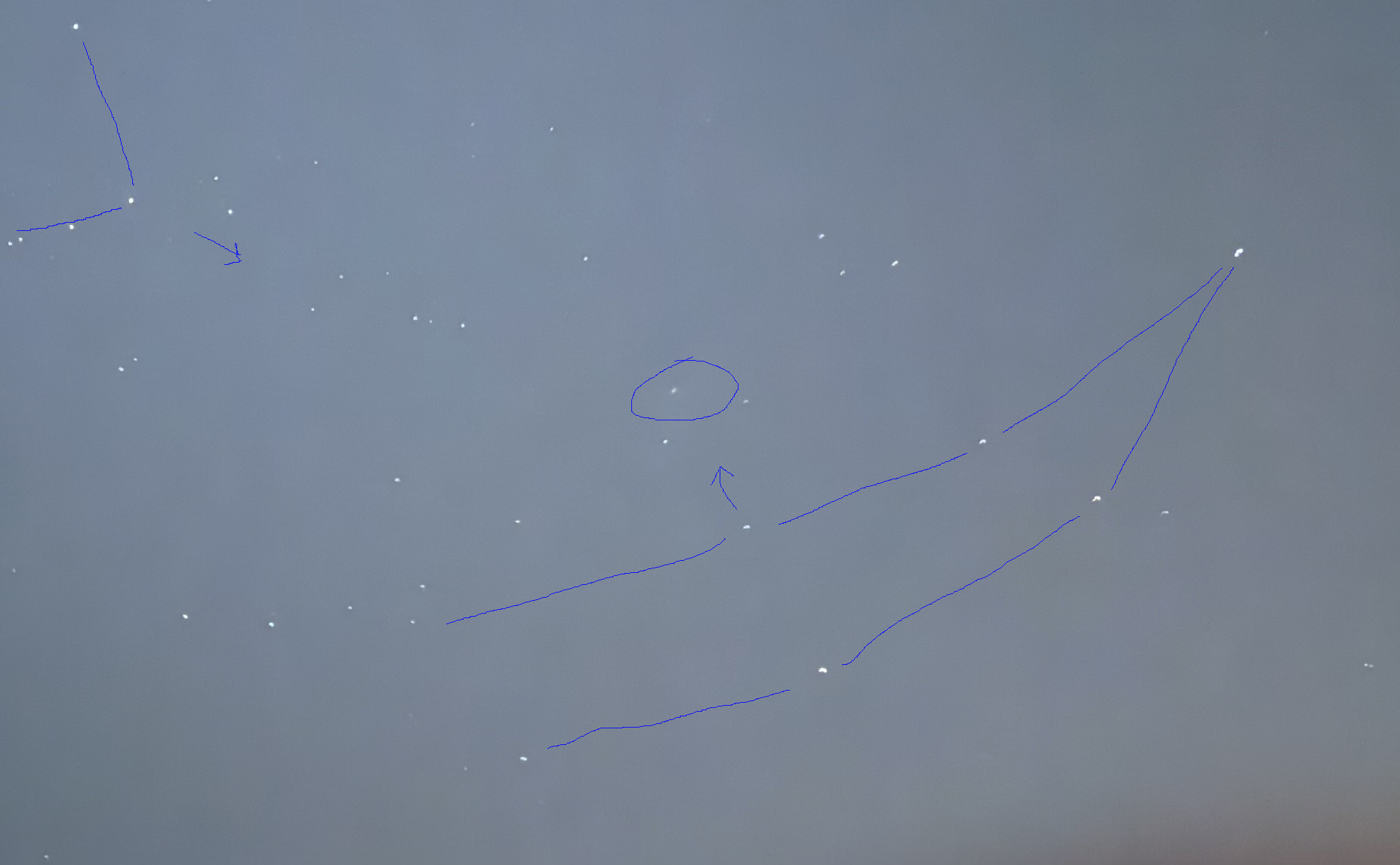 View the Orion Nebula (M42): Magnitude: +4.0 . Apparent Size: 65 Arcminutes Best Seen: Late Fall through Early Spring Best Magnification: Low & Medium (Nebula) 20x - 50x Located under the belt, in the sheath. One of the most rewarding deep-sky object to find, but like Andromeda, you will want dark moonless skies for best view. It appears as a glowing, ethereal cloud. 70mm aperture telescopes will work. The nebula will appear as a glowing, ghostly gray or faintly greenish cloud surrounding a few bright stars. You will *not* see vibrant, swirling colors. 100mm or better apeture is good and will show a little better. 203mm or better aputure is best. 203mm will show the known details. Like Adromeda, you will want lower magnification 20x - 50x. A low-power eyepiece (around 20mm to 25mm), you will spot the glowing mist. A magnification of 40x or 50x, you should be able to resolve the tightly packed cluster of four young stars at its core, known as the Trapezium. 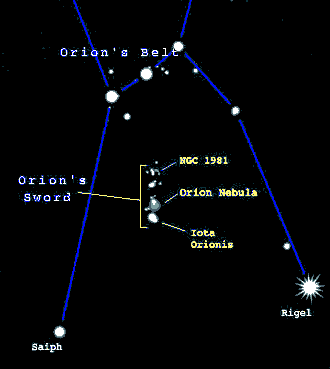
View the Dumbbell Nebula (M27) Magnitude: +7.5 . Angular Size: 8 arcminutes Best Seen in Evening: Summer and Fall Best Magnification: Low (40x) A bright Summer and Fall Nebula. It’s located in the constellation Vulpecula. 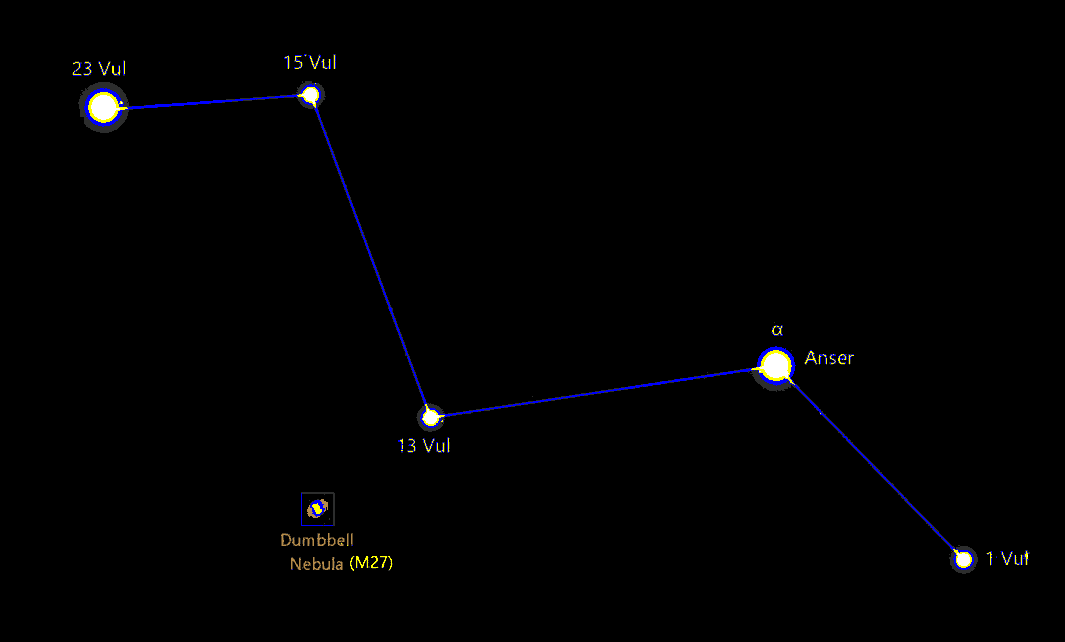 View the Ring Nebula (M57) Magnitude: +8.8 . Best Magnification: Medium to High The angular size of the Ring Nebula is approximately 1.5 by 1.0 arcminutes, meaning it appears slightly elliptical or oval when viewed from Earth. Size and Appearance Details Dimensions: Roughly 1.5 x 1.0 arcminutes (or about 85 to 90 arcseconds across its main bright ring). The best magnification for viewing the Ring Nebula ranges from 100x to 200x, with 100x to 150x serving as the sweet spot for general observation and 300x or higher needed to attempt spotting its faint central white dwarf. To find the Ring Nebula, locate the bright star Vega, look in the constellation Lyra, and aim your telescope between the stars Sheliak and Sulafat. |
 (c) 2000-2026 by Michael Gibson. All graphics, code (php, html, css, javascript, ect.), content (unless source states other), and posts by Michael Gibson. Graphics, content and code created with GIMP, gedit, and usually vim. This page uses CSS that works on *ALL* browsers that are CSS compliant. Like FireFox, Chrome, Edge, and Safari. Moving code to PHP 8.x You are using Mozilla/5.0 AppleWebKit/537.36 (KHTML, like Gecko; compatible; ClaudeBot/1.0; +claudebot@anthropic.com) |