


 and Chasing Jupiter from my Yard.
  Back to MrGibson HOME
| and Chasing Jupiter from my Yard. |
Back to MrGibson HOME |
|
Viewing the Moon The Moon is fun to view. It is easy to view and has so much detail to see. Some telescopes need a Moon filter because of the Moon's brightness - as not to washout the details. Aperture A really large Aperture is not required here. A 70mm Aperture is more than enough light-gathering ability. I have used as small as 44mm Aperture with the Moon Having a smaller Aperture can have advantages in seeing detail with the Moon. f-number A really slow f-number will work. Probably don't want anything faster than f/4. I have gotten pretty good views of the Moon with, f/4.8 , f/5.7 , and f/9.2. That said, in general it will be better to have a higher f-number. Magnification The Moon does not have the same Magnification/zoom limitations as most night time objects. With almost any telescope, you can push further than normal with Magnification than you can with other objects. Optical setups that might have been to dim to use on planets, will likely work for viewing the Moon. From my experience, because the Moon is so bright and close to the Earth, you can blow past your telescope's "Maximum Useful Magnification". For example, my 76mm Aperture would have a Maximum Useful Magnification of 152x, but I have used 210x Magnification with the Moon without any noticeable loss of detail. A Magnification of 25-30x - still looks small in the FOV, but you can make out large features on the surface depending on the phase. A Magnification of 35-45x - More detail popping into view. A Magnification of 50-80x - During crescent and first/third quarter phases, the view of all the larger craters is spectacular! A Magnification of 100x - The disc of the Moon now fills up your entire eyepiece, unless you are viewing a thin crescent in the middle. A Magnification of 200x - Your entire FOV covers about half the surface of the Moon. You start seeing smaller features you didn’t know were there, such as small peaks inside craters! Photographing the Moon. If you are attempting to photograph the Moon, make sure to use a much faster shutter than most objects. There are challenges to photograhing the Moon with a telescope and a phone. This is because of it's brightness. Below are serveral attempts, trying different lenses, with just one telescope. NOTE: A blue outline around the Moon is typically a photographic artifact caused by chromatic aberration or lens flare/ghosting. It happens when the camera lens struggles to focus all wavelengths of light—especially in high-contrast night scenes—causing a colored fringe or internal reflection 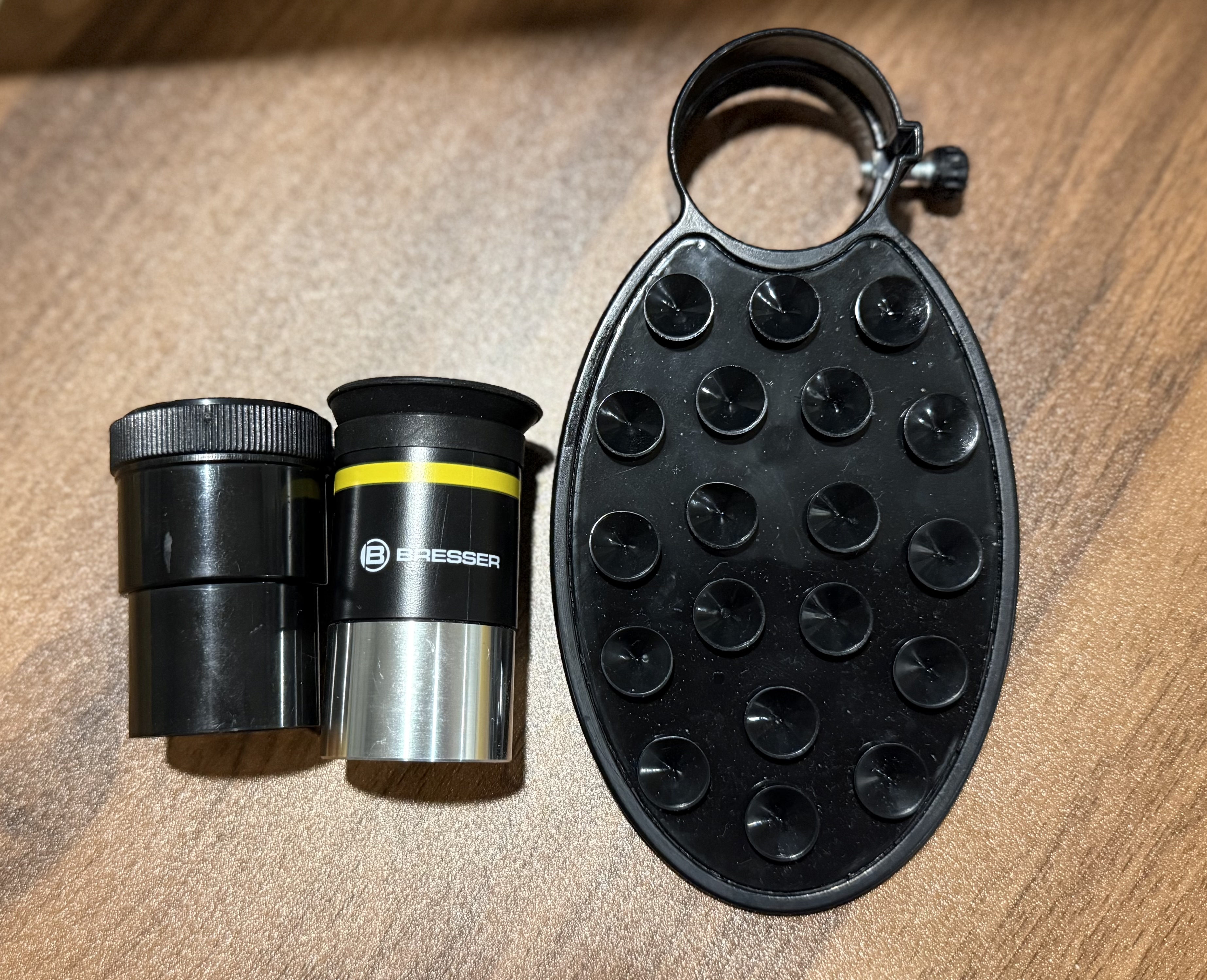 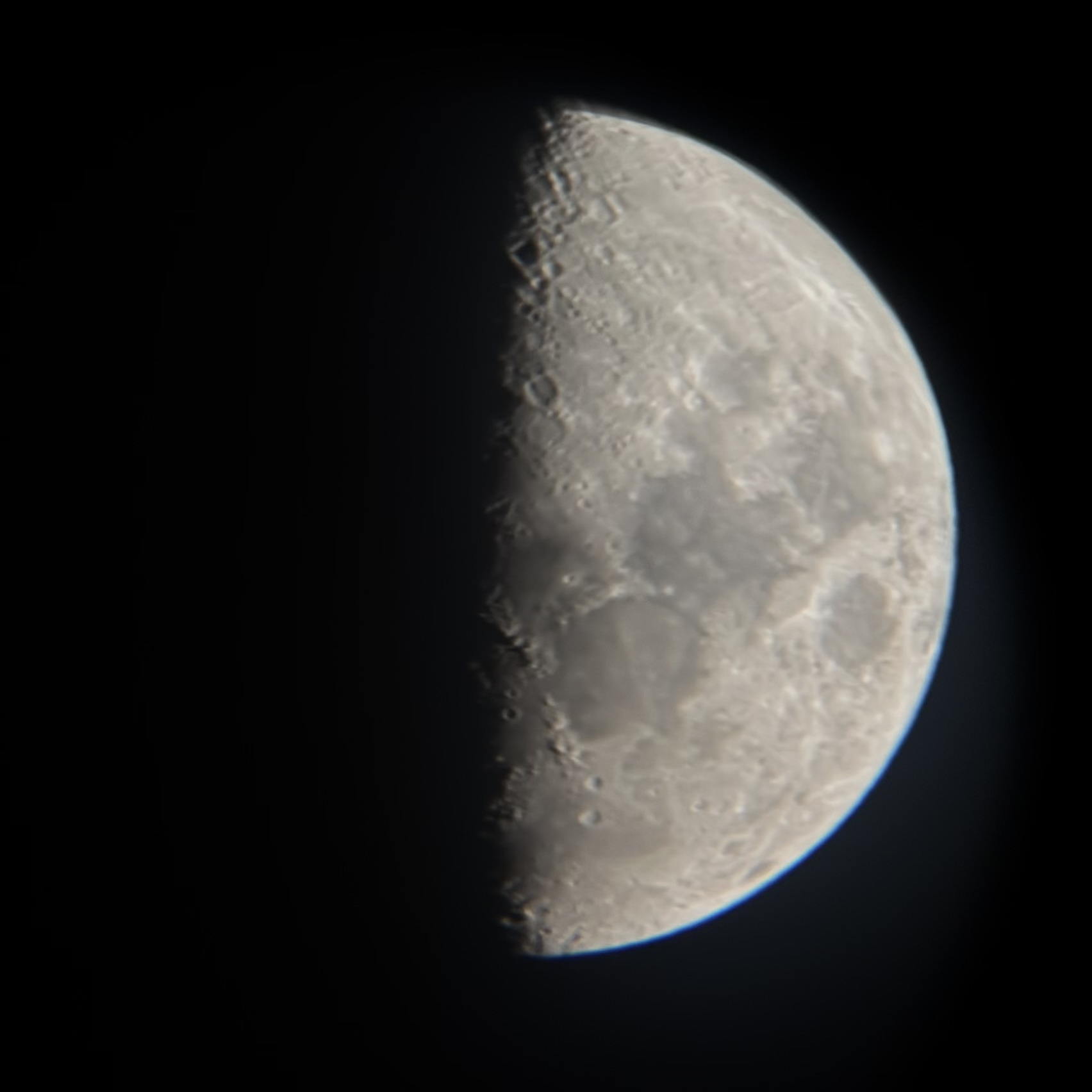 July 21st, 2026 105x Magnification K20mm/1.25” with a 3x Barlow on a 76mm x 700mm telescope for f/9.2 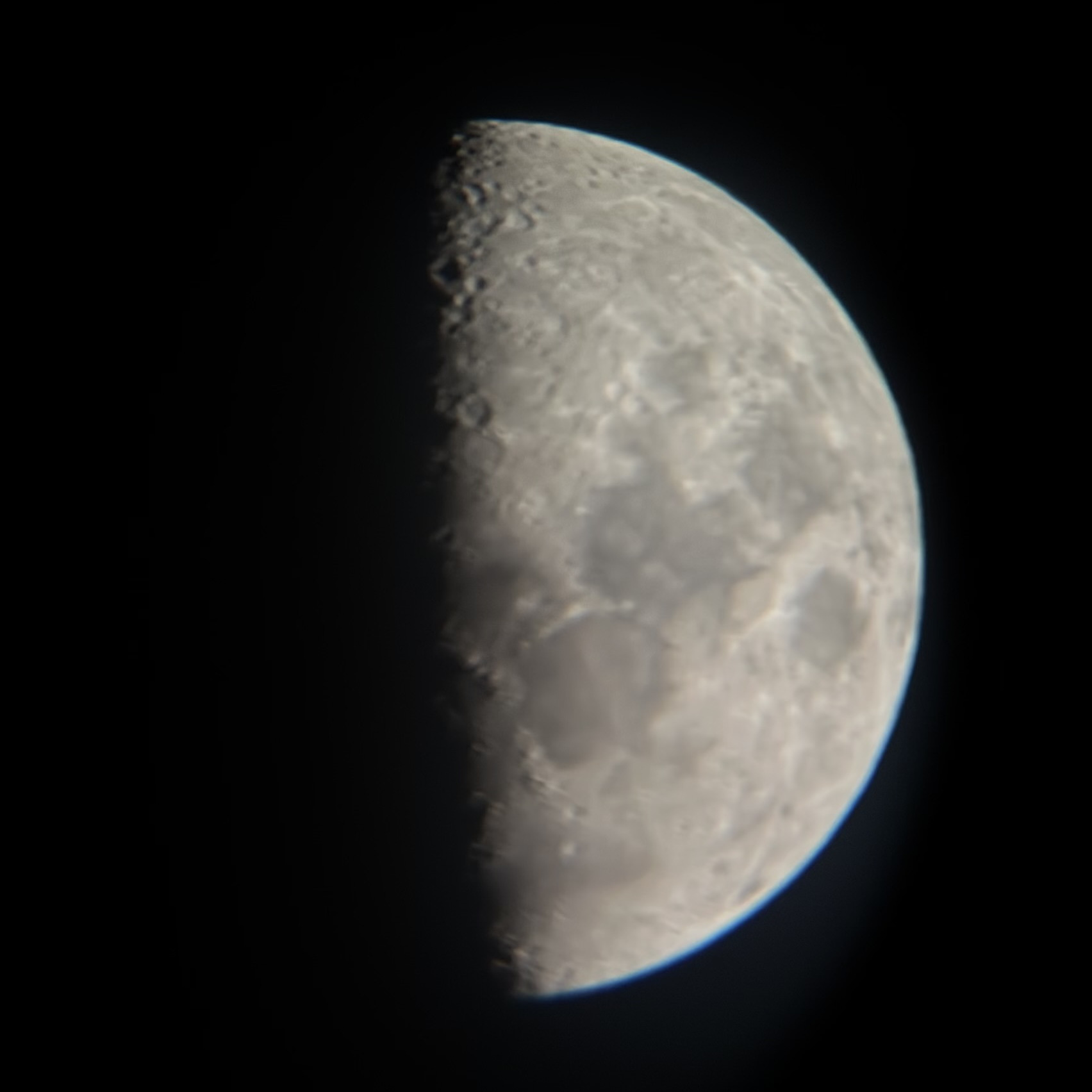 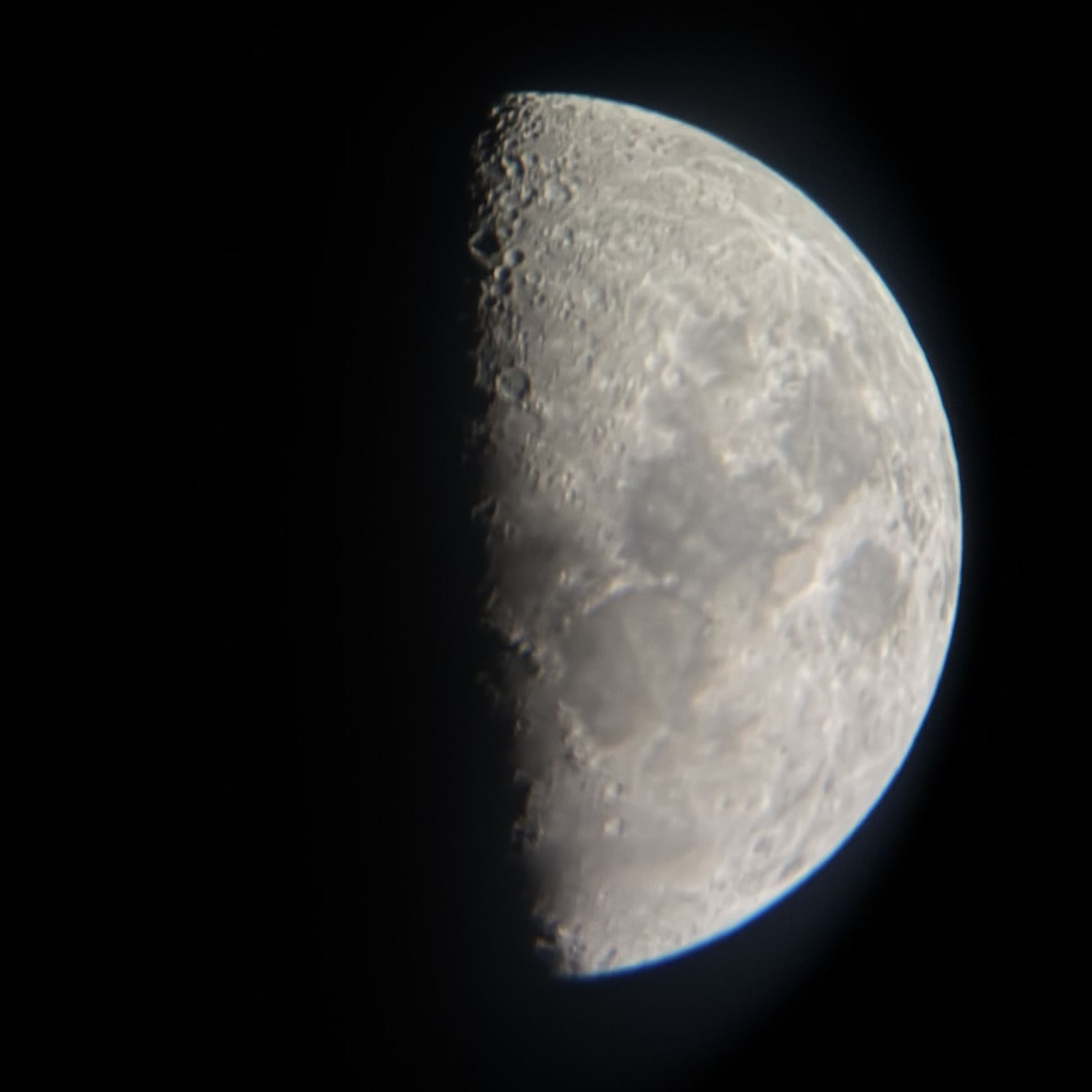 July 21st, 2026 105x Magnification K20mm/1.25” with a 3x Barlow on a 76mm x 700mm telescope for f/9.2 Wide angle lens (20mm/1.25") with a 3x barlow gave me the best results. I believe the Barlow cut down the light enough with my exposure turned all the way down and set to night mode did the trick. I have not had good results with .965" lenses. 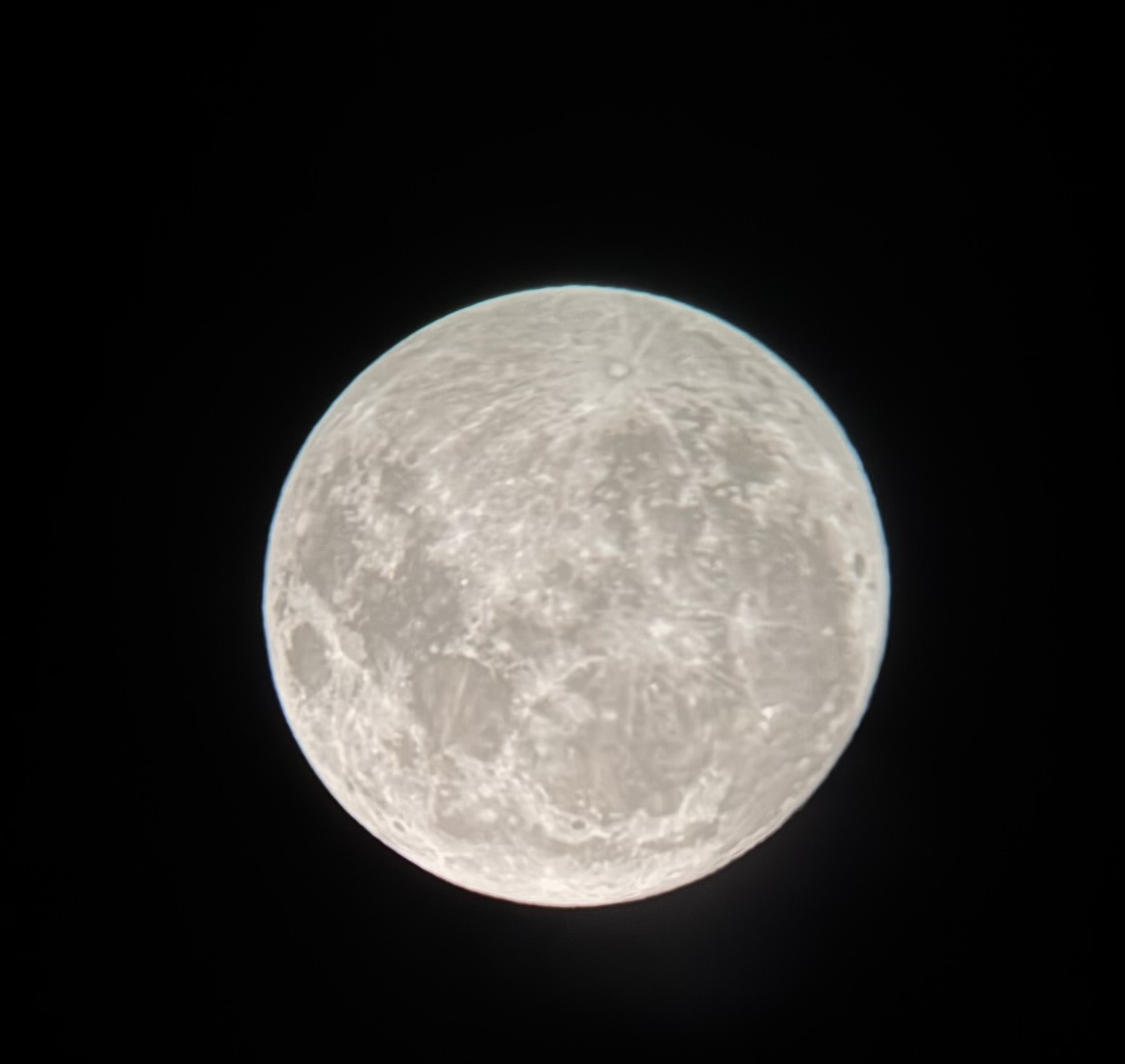 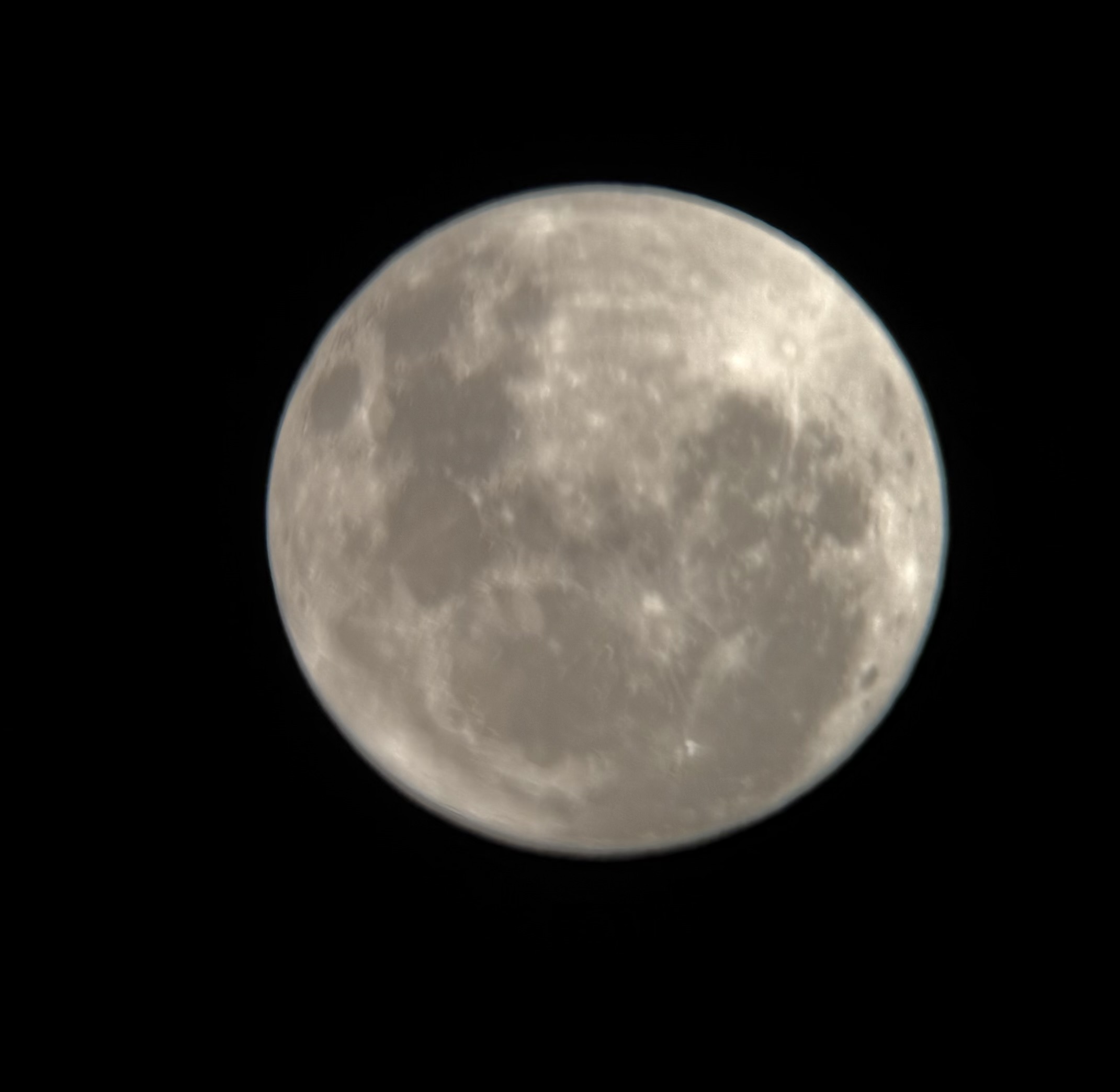 July 28, 2026 K20mm/1.25” lens with a 700mm Fl with 76mm Aperture to make a f/9 telescope for 35x Magnification. iPhone Exposure turned down to -2.0. |
 (c) 2000-2026 by Michael Gibson. All graphics, code (php, html, css, javascript, ect.), content (unless source states other), and posts by Michael Gibson. Graphics, content and code created with GIMP, gedit, and usually vim. This page uses CSS that works on *ALL* browsers that are CSS compliant. Like FireFox, Chrome, Edge, and Safari. Moving code to PHP 8.x You are using Mozilla/5.0 AppleWebKit/537.36 (KHTML, like Gecko; compatible; ClaudeBot/1.0; +claudebot@anthropic.com) |